ProSafe HSE Solutions

HSE Training Services

Practical safety training for every role.

Sixteen instructor-led programmes, adaptable to your site, industry and workforce. Durations are typical and can be tailored to your needs.

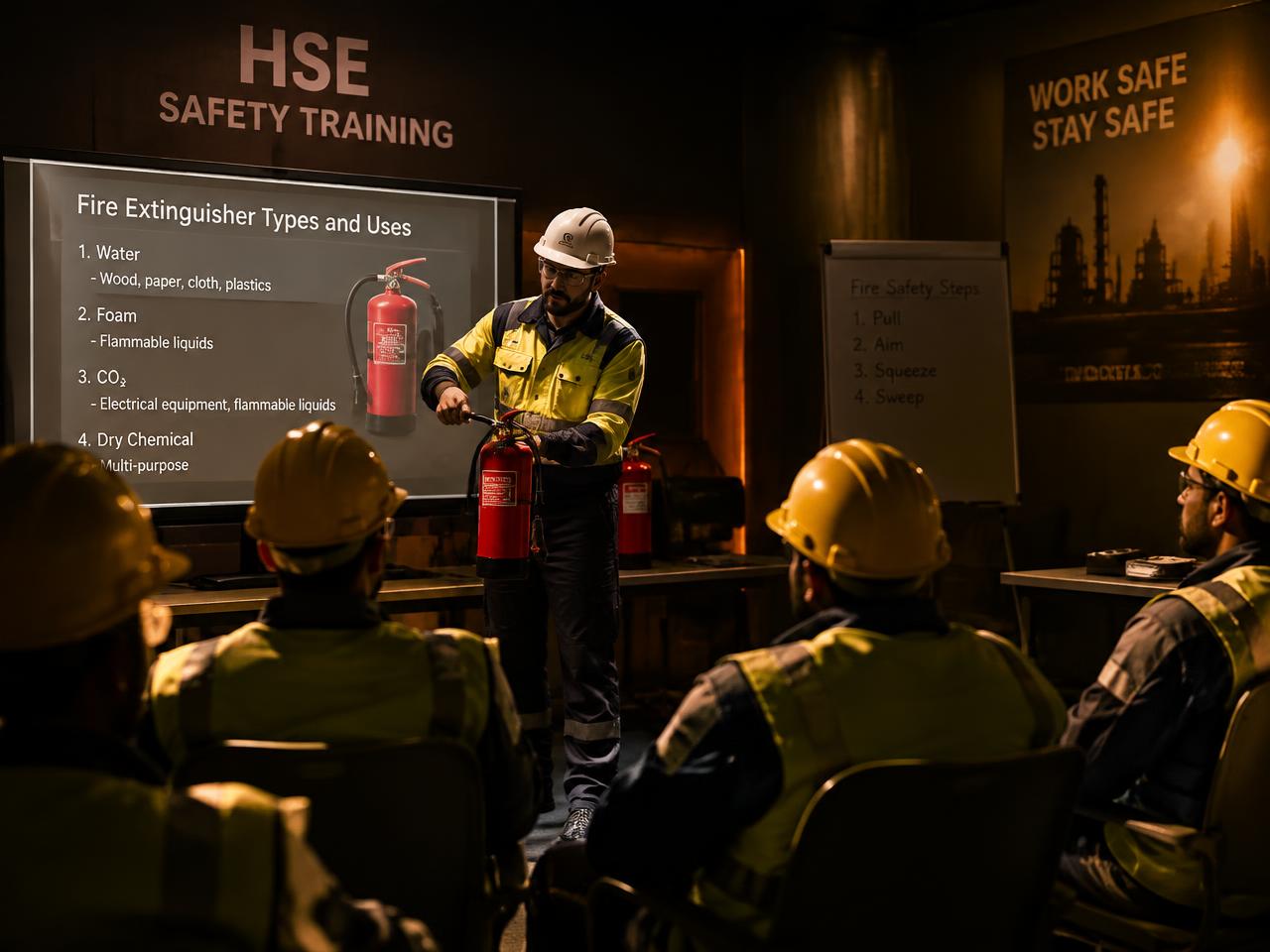
Fire Safety Training

01

Understand how fires start, spread and are prevented, and how to respond safely when a fire occurs in the workplace.

Learning objectives

  • Explain the fire triangle and common ignition sources
  • Select and use the correct type of fire extinguisher
  • Follow evacuation and alarm procedures

Target audienceAll employees, supervisors and facility staff

Typical duration1 day

Methodology: Instructor-led sessions, practical demonstrations, case studies and group exercises, with a knowledge assessment. Includes extinguisher handling where site facilities allow.

Fire Warden Training

02

Prepares nominated personnel to carry out fire warden duties, from routine checks to coordinating evacuation.

Learning objectives

  • Understand fire warden roles and responsibilities
  • Conduct fire safety inspections
  • Lead evacuation and roll-call procedures

Target audienceNominated fire wardens and marshals

Typical duration1 day

Methodology: Instructor-led sessions, practical demonstrations, case studies and group exercises, with a knowledge assessment.

First Aid Training

03

Core first aid skills to give immediate care to an injured or ill person until professional help arrives.

Learning objectives

  • Assess an emergency scene safely
  • Perform CPR and manage the airway
  • Treat bleeding, burns, fractures and shock

Target audienceDesignated first aiders and all workforce levels

Typical duration1–2 days

Methodology: Hands-on practice with training manikins, scenario drills and instructor feedback.

Risk Assessment Training

04

A structured approach to identifying hazards, evaluating risk and selecting effective controls.

Learning objectives

  • Apply the five steps of risk assessment
  • Use a risk matrix to rate likelihood and severity
  • Apply the hierarchy of controls

Target audienceSupervisors, engineers and HSE personnel

Typical duration1 day

Methodology: Instructor-led sessions, practical demonstrations, case studies and group exercises, with a knowledge assessment.

Hazard Identification and Risk Assessment (HIRA)

05

Detailed HIRA methodology for complex operations, tasks and changes in the workplace.

Learning objectives

  • Break tasks into steps and identify hazards
  • Assess residual risk after controls
  • Document and review HIRA records

Target audienceHSE officers, engineers and team leaders

Typical duration2 days

Methodology: Instructor-led sessions, practical demonstrations, case studies and group exercises, with a knowledge assessment. Participants complete a HIRA on a real or sample task.

Permit to Work (PTW)

06

How permit-to-work systems control high-risk activities and the responsibilities of everyone in the chain.

Learning objectives

  • Understand PTW types and when they apply
  • Define issuer, receiver and authoriser roles
  • Complete, suspend and close permits correctly

Target audiencePermit issuers, receivers and supervisors

Typical duration1 day

Methodology: Instructor-led sessions, practical demonstrations, case studies and group exercises, with a knowledge assessment.

Lockout Tagout (LOTO)

07

Safe isolation of hazardous energy before maintenance or servicing of machinery and equipment.

Learning objectives

  • Identify sources of hazardous energy
  • Apply lockout and tagout steps in sequence
  • Verify zero-energy state before work

Target audienceMaintenance technicians, electricians and operators

Typical duration1 day

Methodology: Instructor-led sessions, practical demonstrations, case studies and group exercises, with a knowledge assessment. Includes practical isolation demonstrations.

Working at Height

08

Preventing falls through planning, equipment selection and correct use of fall protection.

Learning objectives

  • Apply the hierarchy for work at height
  • Inspect and wear harnesses and lanyards
  • Understand rescue planning

Target audienceWorkers and supervisors who work at height

Typical duration1 day

Methodology: Instructor-led sessions, practical demonstrations, case studies and group exercises, with a knowledge assessment. Includes equipment inspection practice.

Confined Space Safety

09

Recognising confined spaces and the controls needed for safe entry, work and rescue.

Learning objectives

  • Identify confined spaces and their hazards
  • Understand gas testing and ventilation
  • Define entrant, attendant and supervisor duties

Target audienceEntrants, attendants and entry supervisors

Typical duration1–2 days

Methodology: Instructor-led sessions, practical demonstrations, case studies and group exercises, with a knowledge assessment.

Defensive Driving Awareness

10

Attitudes and techniques that reduce road and site vehicle incidents.

Learning objectives

  • Recognise common causes of vehicle incidents
  • Apply space, speed and observation techniques
  • Manage fatigue and distraction

Target audienceCompany drivers and light vehicle operators

Typical duration1 day

Methodology: Instructor-led sessions, practical demonstrations, case studies and group exercises, with a knowledge assessment.

Excavation Safety

11

Controlling the risks of trenching and excavation work, including collapse and underground services.

Learning objectives

  • Identify excavation hazards
  • Understand shoring, benching and sloping
  • Apply safe access and inspection practices

Target audienceSite engineers, supervisors and civil crews

Typical duration1 day

Methodology: Instructor-led sessions, practical demonstrations, case studies and group exercises, with a knowledge assessment.

Electrical Safety

12

Awareness of electrical hazards and safe work practices around energised equipment.

Learning objectives

  • Understand shock, arc flash and burn hazards
  • Apply safe isolation principles
  • Select appropriate PPE and tools

Target audienceElectricians, technicians and general workforce

Typical duration1 day

Methodology: Instructor-led sessions, practical demonstrations, case studies and group exercises, with a knowledge assessment.

Lifting and Rigging Safety

13

Planning and carrying out lifting operations safely, from rigging selection to signalling.

Learning objectives

  • Understand lift planning basics
  • Inspect slings, shackles and rigging gear
  • Use standard hand signals

Target audienceRiggers, banksmen and lifting supervisors

Typical duration1–2 days

Methodology: Instructor-led sessions, practical demonstrations, case studies and group exercises, with a knowledge assessment. Includes rigging gear inspection exercises.

Manual Handling

14

Reducing musculoskeletal injuries through good lifting technique and task design.

Learning objectives

  • Understand how injuries occur
  • Apply safe lifting techniques
  • Assess manual handling tasks

Target audienceAll workers involved in lifting or carrying

Typical durationHalf day

Methodology: Instructor-led sessions, practical demonstrations, case studies and group exercises, with a knowledge assessment. Includes practical lifting practice.

Incident Investigation

15

Structured investigation of incidents and near misses to identify root causes and prevent recurrence.

Learning objectives

  • Secure the scene and gather evidence
  • Apply root cause analysis techniques
  • Write clear findings and corrective actions

Target audienceSupervisors, managers and HSE personnel

Typical duration2 days

Methodology: Instructor-led sessions, practical demonstrations, case studies and group exercises, with a knowledge assessment. Participants investigate a simulated case.

Emergency Response Training

16

Preparing teams to respond effectively to fires, spills, medical emergencies and other site incidents.

Learning objectives

  • Understand emergency response plans
  • Coordinate roles during an emergency
  • Conduct and evaluate drills

Target audienceEmergency response teams and site management

Typical duration1–2 days

Methodology: Instructor-led sessions, practical demonstrations, case studies and group exercises, with a knowledge assessment. Includes tabletop and practical drill scenarios.

Corporate enquiries

Plan your next safety programme with us.

Tell us about your workforce, site and goals. We will propose a training or consultancy plan to suit.